
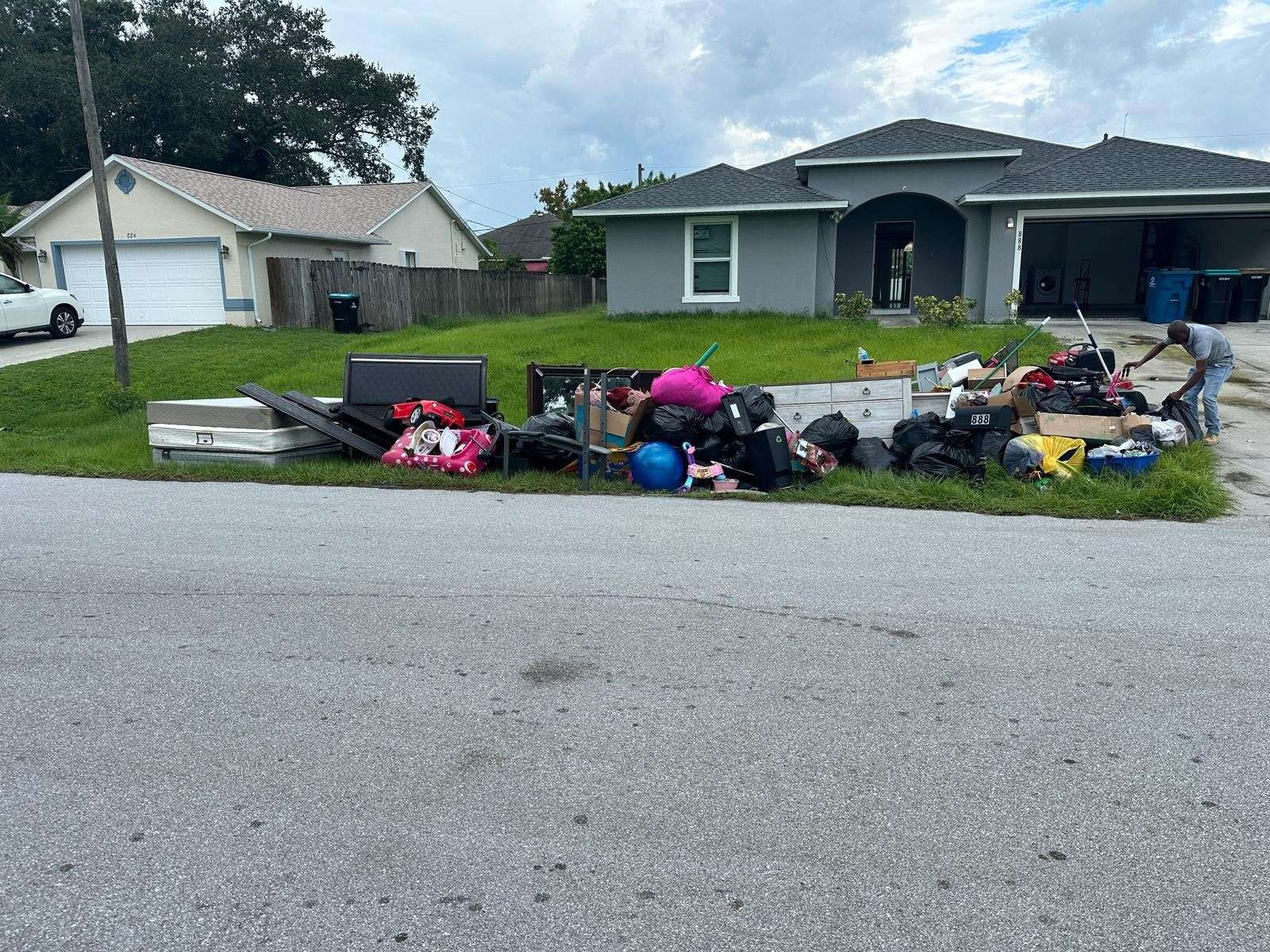
From the moment a tenant hands back the keys, or is ordered out by the court, to the day a new resident moves in, every vacant day costs you rent. This guide walks Brevard County property managers through a clean, legally careful turnover: confirm possession, document the unit, handle abandoned property, clear it out, clean it and make it rent-ready.
This guide is general information, not legal advice. Florida landlord-tenant law has specific notice and timing rules, so confirm anything legal with a Florida attorney.
Why the Cleanout Matters
Whether you manage condos in Cocoa Beach, single-family homes in Palm Bay or a small complex in Melbourne, the cleanout is the step you control most. A fast, organized cleanout shortens vacancy.
A rushed one creates risk. Disposing of a former tenant’s belongings the wrong way can lead to a claim against you. The steps below are built to protect you first and move fast second.
Step 1: Confirm Legal Possession
Before anything is moved, make sure you have the legal right to re-enter. In Florida, possession generally comes back to you in one of three ways:
- Surrender: the tenant moves out and returns the keys.
- Abandonment: the tenant is gone and the situation meets Florida’s legal test for abandonment [CONFIRM: abandonment presumption under Fla. Stat. 83.59, generally absence of half the rental period with rent unpaid and no written notice of absence].
- Eviction: the court issues a writ of possession and it is executed by the sheriff.
If there is any doubt, talk to a landlord-tenant attorney before you go in.
Step 2: Document Everything
Walk the unit with your phone recording video before you touch anything. This record supports your security deposit deductions and protects you if the former tenant disputes damage.
- Photograph every room with wide and close-up shots
- Narrate a video walkthrough and say the date out loud
- Record each item of personal property left behind
- Check appliances, HVAC filters, plumbing and electrical
- Note pests, mold or structural damage
- Compare against your move-in condition report
Step 3: Handle Abandoned Property Correctly
This is where expensive mistakes happen. Florida has rules for belongings left behind, and which rules apply depends on how the tenant left and what your lease says. In general:
- After an executed writ of possession, Florida law addresses removal of the tenant’s property from the unit [CONFIRM: Fla. Stat. 83.62 rules on removing property after a writ].
- If your lease includes the abandoned-property clause set out in Florida Statute 83.67, it may let you dispose of property left after the tenant surrenders or abandons the unit [CONFIRM: exact clause and when it applies].
- Otherwise, Florida Statutes Chapter 715 sets a written-notice process: you describe the items, say where they are stored, and give a deadline to claim them before you sell or dispose of them [CONFIRM: notice period, the $500 value threshold and public sale rules under Chapter 715].
Store items reasonably while any notice period runs. A cleanout crew can help you sort and list what is there so you have a clear record of what was donated, sold or discarded.
Step 4: Schedule the Junk Removal
Once you have legal clearance, bring in a crew to clear the unit. A full eviction cleanout removes furniture, appliances, mattresses, bulk trash, yard debris and anything else left behind, usually in one visit.
If you manage several units, one vendor who knows your properties saves you time on every turnover. Dumpster Wiz handles cleanouts as part of our property services for Brevard County, which also cover REO, preservation and vacant lawn care.
Step 5: Deep Clean the Unit
Once the unit is empty, deep clean before showings. That goes past a standard clean:
- Kitchen, including inside the oven, refrigerator and cabinets
- Bathrooms, including grout, caulk, fixtures and exhaust fans
- Carpet steam cleaning or hard floor care
- New HVAC filter and clean vents
- Windows inside and out
- Garage, lanai and outdoor areas
- Pest inspection and preventive treatment
In Florida’s humidity, look closely at bathrooms, kitchens and anywhere mold may have started.
Step 6: Make-Ready Repairs
Work through every repair from your inspection. Scuffed paint, broken blinds and leaky faucets give applicants a reason to negotiate or move on. Fix safety and habitability items first, then cosmetic ones. A fresh coat of neutral paint photographs well and erases the last tenancy.
Brevard County Considerations
Humidity and Mold
A closed-up vacant unit can develop mold quickly, especially with the AC off or a neglected HVAC system. Check behind the refrigerator, under sinks and around window units during every cleanout. Catching it early costs far less than remediation after a new tenant reports it.
Storm Debris
If a tenant left after storm damage, the job may include downed limbs, damaged fencing, roofing and storm trash. Handling the storm debris cleanup and the interior cleanout in one visit means fewer contractors and a faster turnover.
Seasonal Timing
Rental demand on the Space Coast tends to pick up in late winter and early spring [CONFIRM: local seasonal demand pattern]. If a unit comes open ahead of that window, a quick turnover helps you list it while demand is strong.
What to Look for in a Cleanout Partner
- Licensed and insured
- Same-day or next-day availability
- Clear, volume-based pricing
- Donation and recycling where possible
- Experience with eviction and hoarder cleanouts
Schedule a Tenant Cleanout in Brevard County
Dumpster Wiz works with property managers and landlords across Palm Bay, Melbourne, Cocoa and the rest of Brevard County. See our eviction cleanout service, browse a real Palm Bay tenant cleanout, or call (321) 376-1661 for a free quote.